I love the Horniman Museum in South London, and have worked with them on some colourful text-writing projects in the past.
My most recent involvment there, however, was in 2022: creative development around their Nature Trail, community garden and play area as part of the nature + love project. In the wake of the pandemic, the team was keen to open up its gardens to even wider audiences, as well as developing the Museum’s estate in a climate-aware way.
My brief was to research and suggest interpretive approaches sympathetic to the environment, unpacking natural and cultural heritage and connecting with wellbeing. After meetings and tours with Horniman Exhibition Manager Cressida Diez-Finch and Head of Horticulture Errol Reuben Fernandes, I proposed intuitive interactivity showcasing cycles and seasons; tactile metal bird and insect cutouts; lookout and listening points; moments in which to pause; ways to integrate rain; understanding of balance, layers and connection; wood, stone and metal as materials.
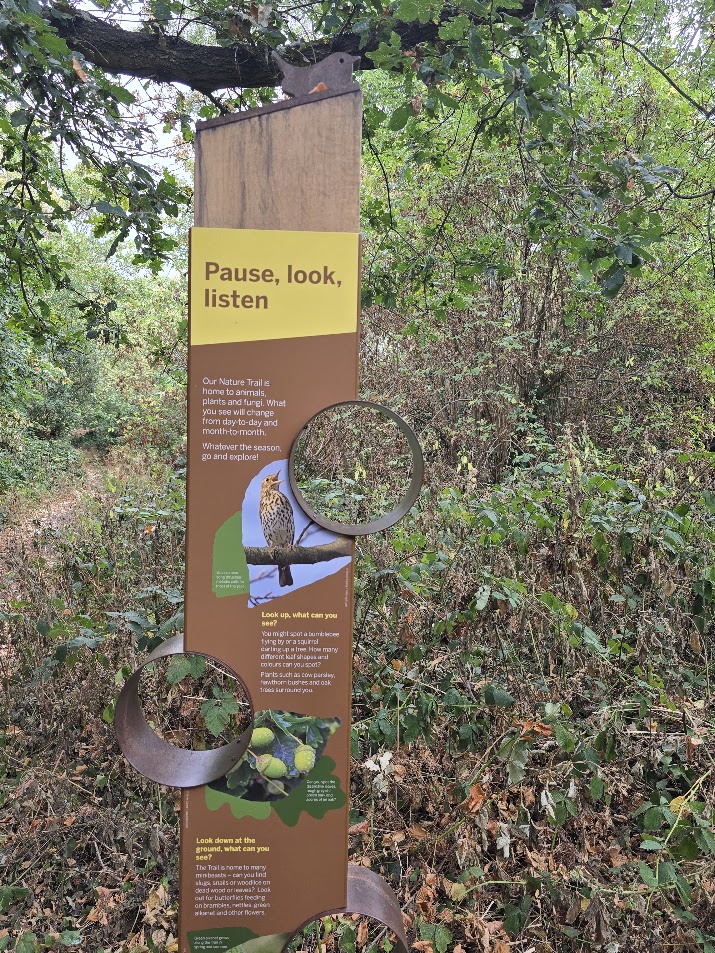
The project as a whole will roll out in 2026 and 2027, but the other day I was staying in Greenwich and travelled over to Forest Hill to see how things were going. I was delighted to be able to walk the Nature Trail, and I have written about it in my substack here. The path runs down the western side of the gardens, a route bursting with life and resonating with stories because it was once part of the Great North Wood that covered this part of London. This idea links with my interest in holloways – the ancient paths created by human feet and animal tracks as we move through the landscape.
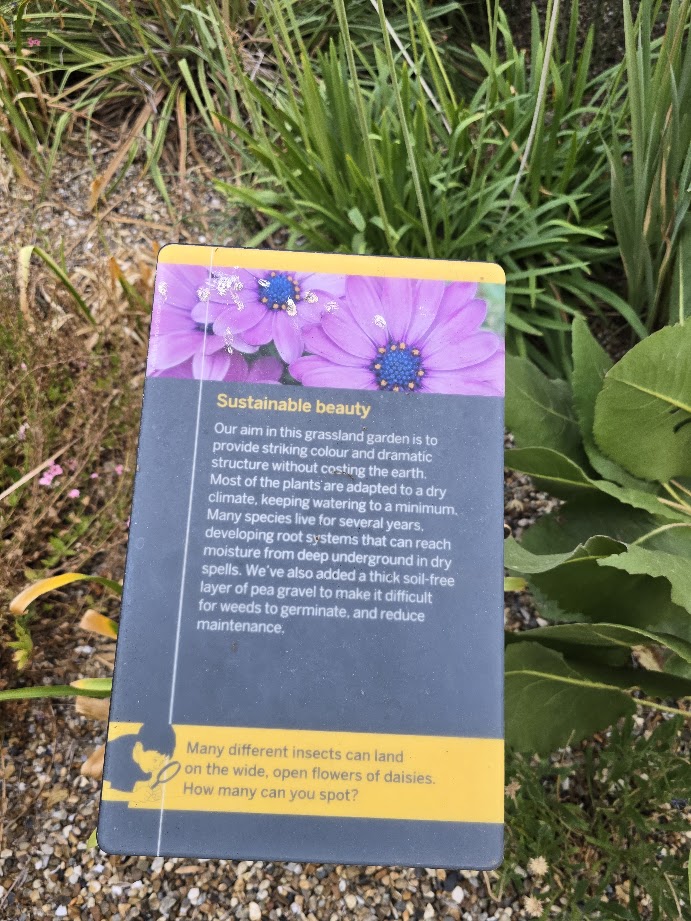
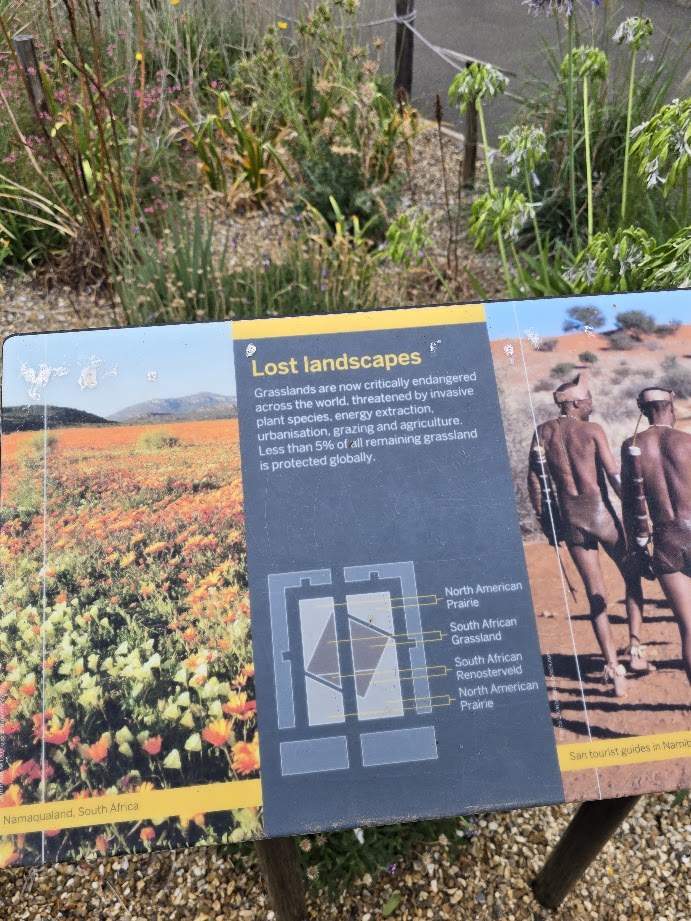
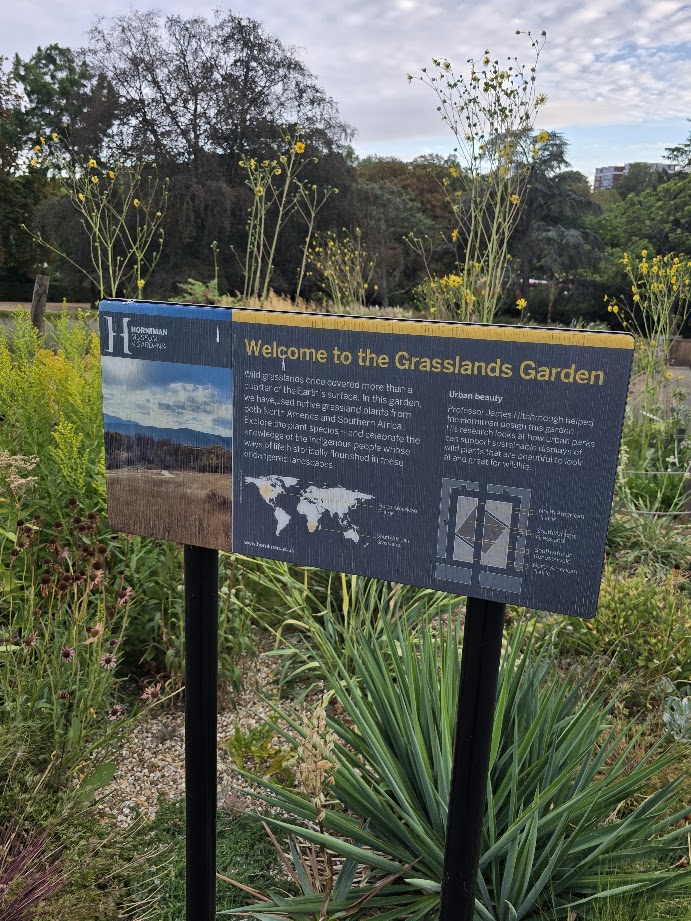
But before I walked the Nature Trail, I also explored the more formal planted areas – and rediscovered some text I edited in 2018 but had never seen. This was for the Grasslands Garden, and it joins the Dye Garden, Medicine Garden, and Materials Garden for which I have written and edited text. It was great to see the Grasslands planting thriving, as wild grasslands once did across a quarter of our planet’s surface.