Joni Mitchell, The Mamas & the Papas, CSNY, Jackson Browne, The Monkees, James Taylor, The Eagles, Carole King, The Doors… these artists and their songs conjure one of the sunniest periods in America’s musical history.
Now, the Laurel Canyon Project sets out on a journey through the leafy Californian valleys, celebrating this iconic music in song and story.
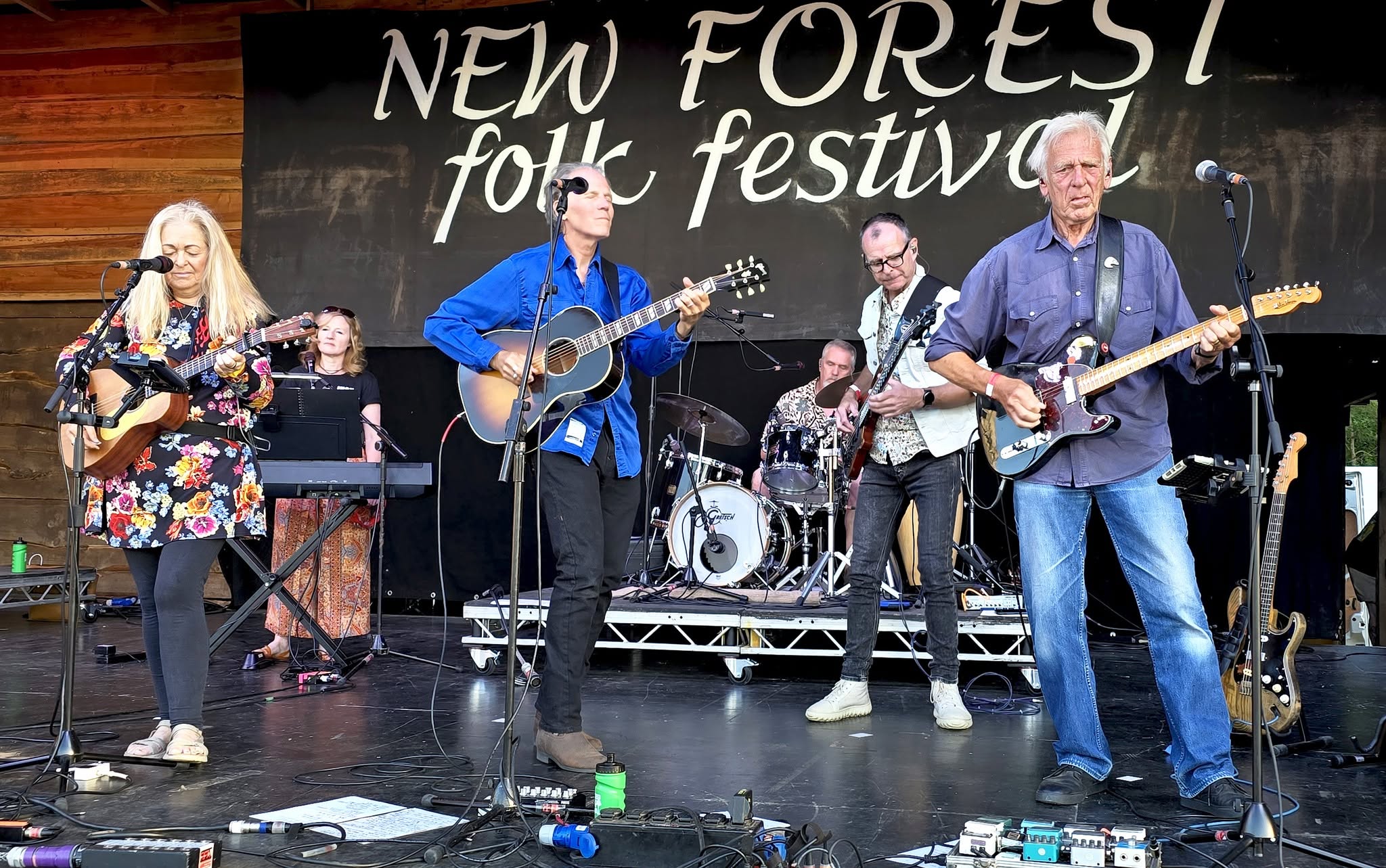
LCP combines the talents of singer-guitarists PJ Wright (a veteran of the English folk scene who spent time in Laurel Canyon in the 70s), Sally Barker (famous from The Voice), and Brooks Williams (who sings just like James Taylor), with drummer Mark ‘Parky’ Stevens. For festival appearances this summer, they are joined by Mat Davies on bass and me on keys, with Josh Law providing expert sound engineering.
With the vocal skills of Sally, Brooks and PJ, material ranges nimbly from California Dreamin’ to Fire and Rain, along with the close harmony of Helplessly Hoping, not to mention Riders on the Storm sung rather brilliantly by Parky. But how could the story of the show best summon Laurel Canyon’s magic?
PJ and I wrote a script to provide a narrative direction, setting the scene:
It’s 1960. Rock n roll’s first wave is over, Elvis is in the army, Chuck Berry is in jail, and Buddy Holly and Eddie Cochran are dead. In colleges and coffee houses, Bob Dylan and Joan Baez sing protest songs, and the radio airwaves are occupied by crooners.
Then Beatlemania hits America. The fashion swings towards singer-songwriters and rock bands, and LA develops a flourishing music scene attracting young folk musicians. They settle on the low-rent hillsides of Laurel Canyon, where they become neighbours, lovers and bandmates.
PJ and the group have carefully curated the songs to represent all the significant genres of Laurel Canyon. These include folk-rock (the first official folk-rock song opens the show: Tambourine Man by Bob Dylan, made famous by The Byrds), along with country-pop (Last Train to Clarkesville), R&B pop (Up on the Roof) folk-pop (California Dreamin’), country rock (Take It Easy) and singer-songwriter (various numbers by Carole King, James Taylor, Joni Mitchell, Neil Young, Jackson Browne and more).
We worked on anecdote-rich introductions to the songs that allowed us to mention key elements of Laurel Canyon life, such as the bohemian party homes of Cass Elliott, Joni Mitchell, Peter Tork and Mickey Dolenz. No one is exactly sure which dwelling brought Crosby, Stills, Nash and Young together for the first time, but it changed the world. We wove in references to the Troubadour club on Santa Monica Boulevard where everyone played (and James Taylor met Carly Simon). There was also mention of Geffen and Roberts’ Asylum record label, the money funnel that made many artists into millionaires.
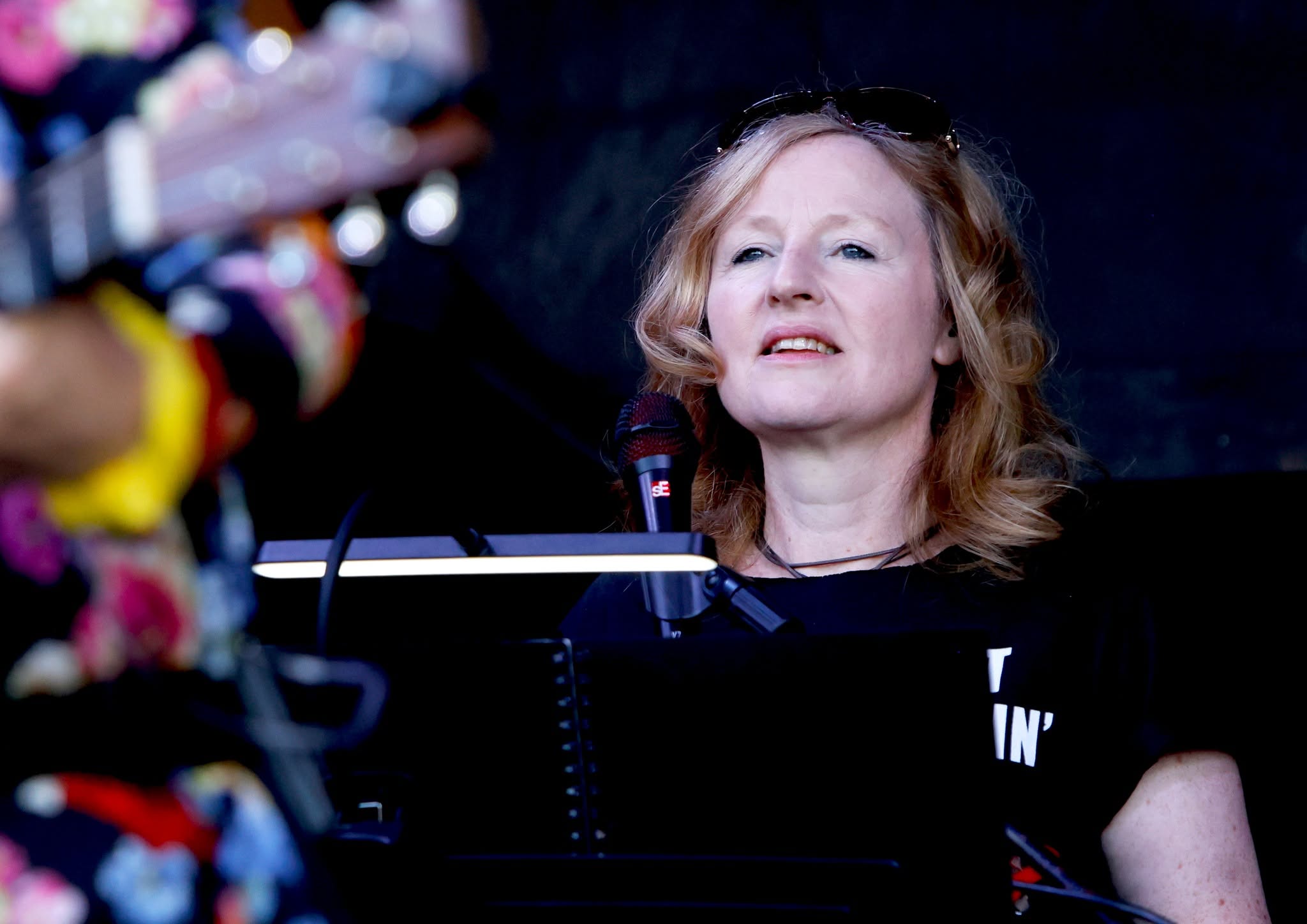
Laurel Canyon gave rise to a dizzying number of creative collaborations, with constant exchanges in line-ups and love interests. CSNY formed and split despite their success. Linda Ronstadt’s backing band turned into the Eagles, with her blessing. Joni Mitchell invited three exes to sing backing vocals on In France They Kiss on Main Street – David Crosby, Graham Nash and James Taylor. With so many stories, there was far more to say than we could fit in, and individual intros were timed to 20 seconds each.
During rehearsals there was the chance to polish and edit the script to be comfortable to those delivering it. Sally added the tale of Carole King moving to the Canyon with her children, but being such a bad driver that other parents avoided her offers to share lifts to school. She also mentioned that the local carpenter was in constant demand to repair Carole’s gatepost – the carpenter being Harrison Ford.
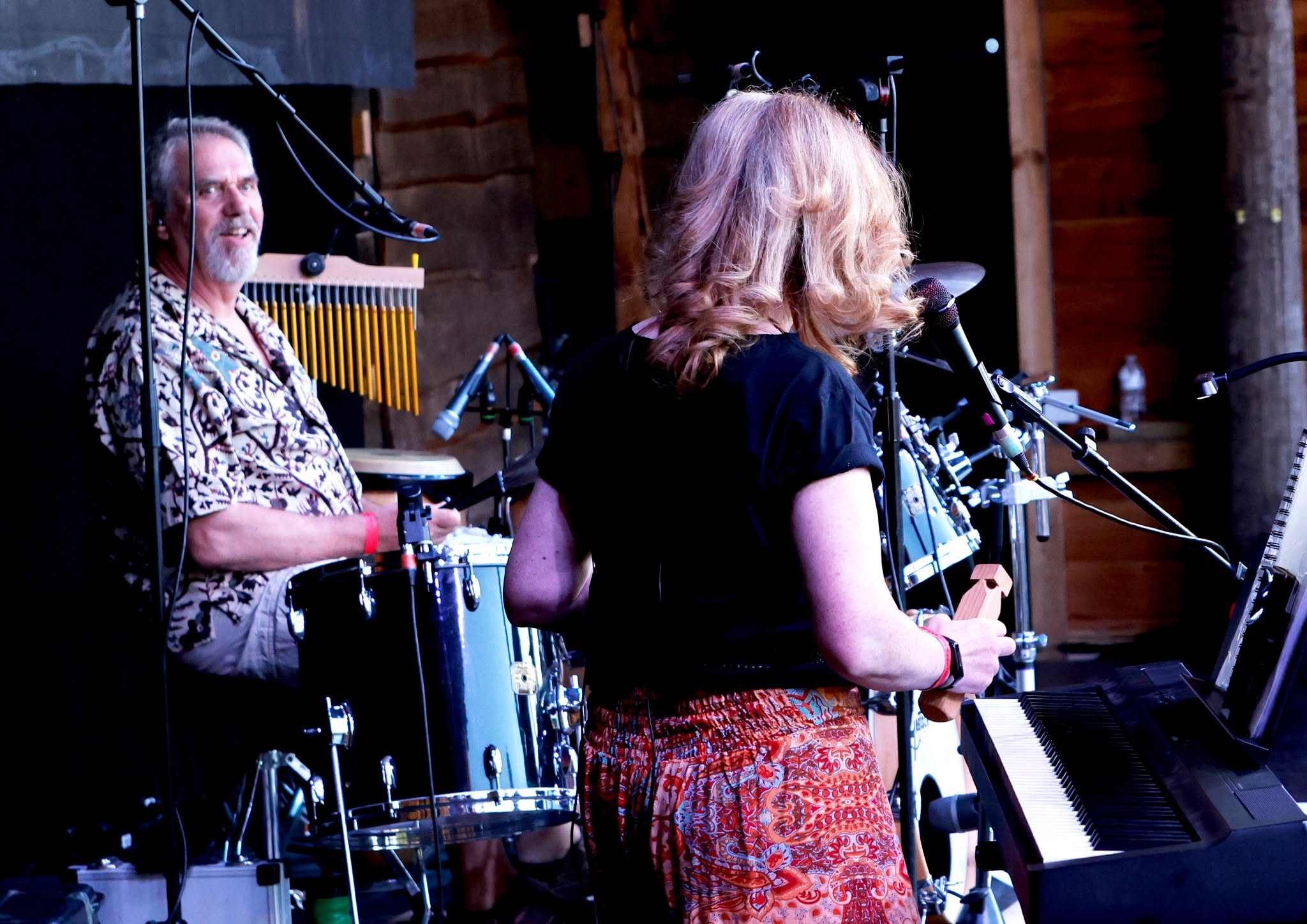
In the show the darker strains of American life make an appearance through songs like Angel of Montgomery, made famous by Canyon resident Bonnie Raitt, which imagines the experience of a Vietnam veteran’s wife. The influence of drugs enters the tale via Willin’, a truckers’ song written by Lowell George with the lyric ‘if you give me weed, whites and wine, and you show me a sign, I’ll be willing to be moving’. It’s a wonderful song to sing, but it got him kicked out of the drug-free zone that was Frank Zappa’s backing band. And that was long before cocaine inflated people’s egos, ruined lives and chased the chilled-out vibe away.
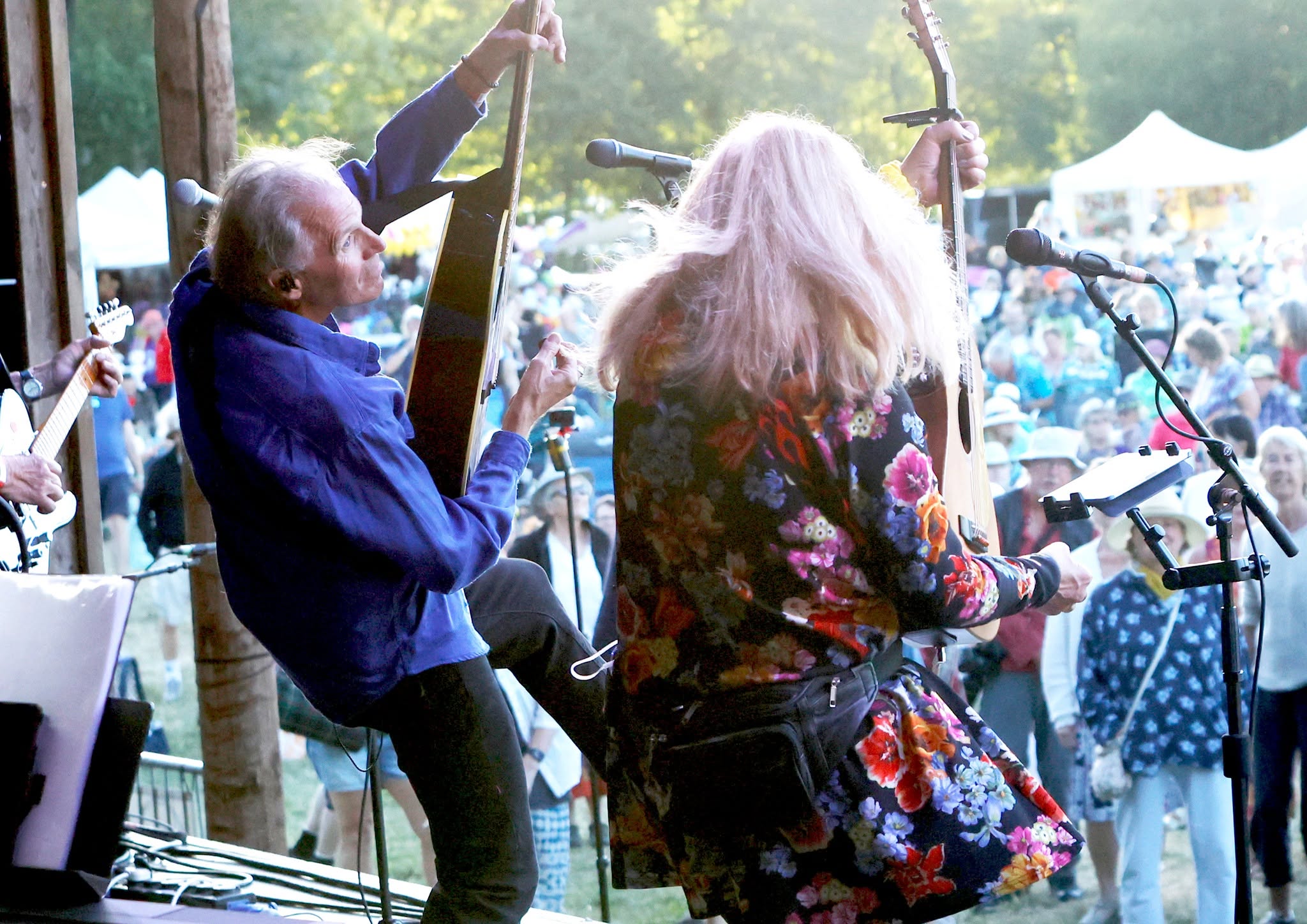
But the Laurel Canyon Project tells a sunny story overall, and audiences have been enjoying hearing it at Folk on the Pier and at New Forest Folk Festival. Gig dates are available on the group’s Facebook page.
With many thanks to Kevin Smith for the photographs.